Can a Silent Computer Be Superior to a Non-Silent One?
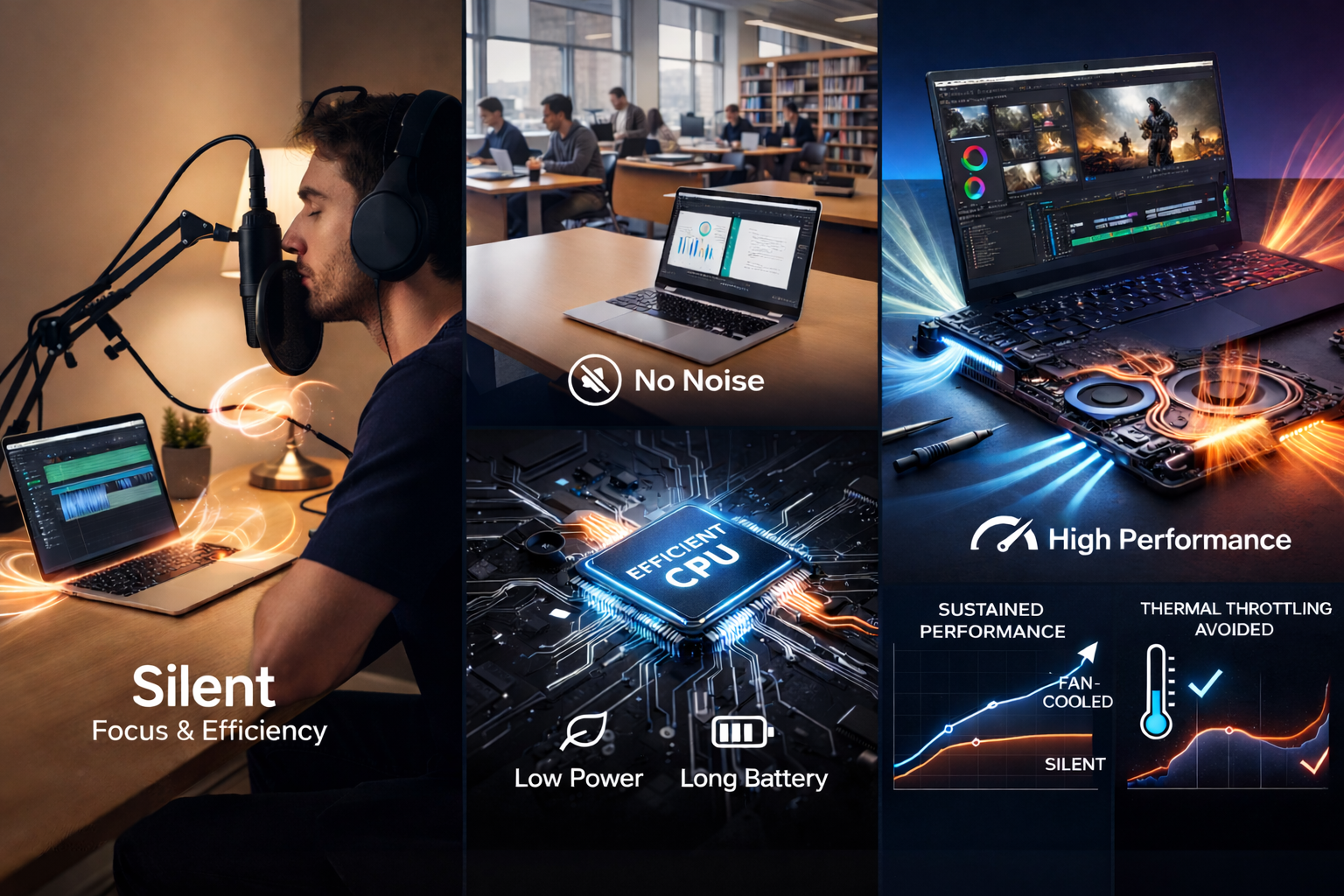
Is a Silent Computer Better Than a Non-Silent One?
In Terms of Performance — Usually Not.
Silence sounds premium.
It feels high-end. Smooth. Refined.
Like a luxury car gliding quietly down the road.
But true performance is different.
It’s more like a Formula One race car.
It’s built for speed — and speed makes noise.
When we focus on performance, a silent computer usually isn’t better than one with audible fans.
In many cases, it’s the opposite.
1. Powerful Computers Create Heat
Every computer creates heat when it works.
The harder it works:
The more power it uses
The more heat it creates
The more cooling it needs
That’s not poor design.
That’s physics.
More power = more heat.
2. Silent Computers Have Limits
To stay silent, a computer must control heat.
That usually means:
Using lower-power components
Limiting how fast the system can run
Reducing performance when temperatures rise
Some companies even limit their fan speeds on purpose to keep systems quieter.
But slower fans mean less cooling.
And less cooling often means the system can’t reach — or sustain — its full performance potential.
If the heat can’t escape, the computer protects itself by slowing down.
So while a silent machine may feel fast at first, it can lose speed during long or demanding tasks.
3. Fans Help Unlock Full Performance
A properly cooled computer moves heat out efficiently.
That allows it to:
Maintain higher speeds
Handle heavy workloads
Run at full power for longer periods
Fans aren’t a flaw.
They’re what allow high-performance hardware to actually perform.
Cooler components = consistent speed.
4. Big Tasks Need Real Cooling
Demanding activities like:
Video editing
3D design
Gaming
Music production
Large software projects
Create sustained heat.
A system designed mainly for silence may reduce performance to stay quiet.
A system designed for performance keeps airflow moving so speed stays consistent.
And consistent speed is real performance.
Performance Is Priority
At some companies, silence is the goal — even if it means limiting fan speeds and holding back full output.
Here at Kreative Devices, performance is the priority.
What’s the point of buying a high-performance machine if you can’t take full advantage of it?
Powerful hardware should be allowed to perform at its full potential.
That requires cooling.
Final Thoughts
Is a silent computer better?
If your workload is light, silence can be great.
But if performance matters, airflow matters.
High performance creates heat.
Heat needs cooling.
And real, sustained performance usually isn’t silent.